
Parent Coaching + Developmental Consultation
Let’s Wonder Together to Better Understand Your Child
Thoughtful, individualized support to help you understand your child's development, behavior, communication, and needs, and feel more confident about what comes next.

Welcome to Wonder Brightly
Understanding Changes Everything
When something feels hard with your child, it's easy to focus on what needs to stop, change, or get better.
At Wonder Brightly, the starting point is curiosity.
What might this behavior be communicating? What does your child need in this moment? What changes when we understand what's happening underneath?
Together, we'll slow things down, look a little closer, and turn developmental understanding into practical support for your actual child and family.


A DIFFERENT KIND OF SUPPORT
Working Together Can Look Different for Every Family
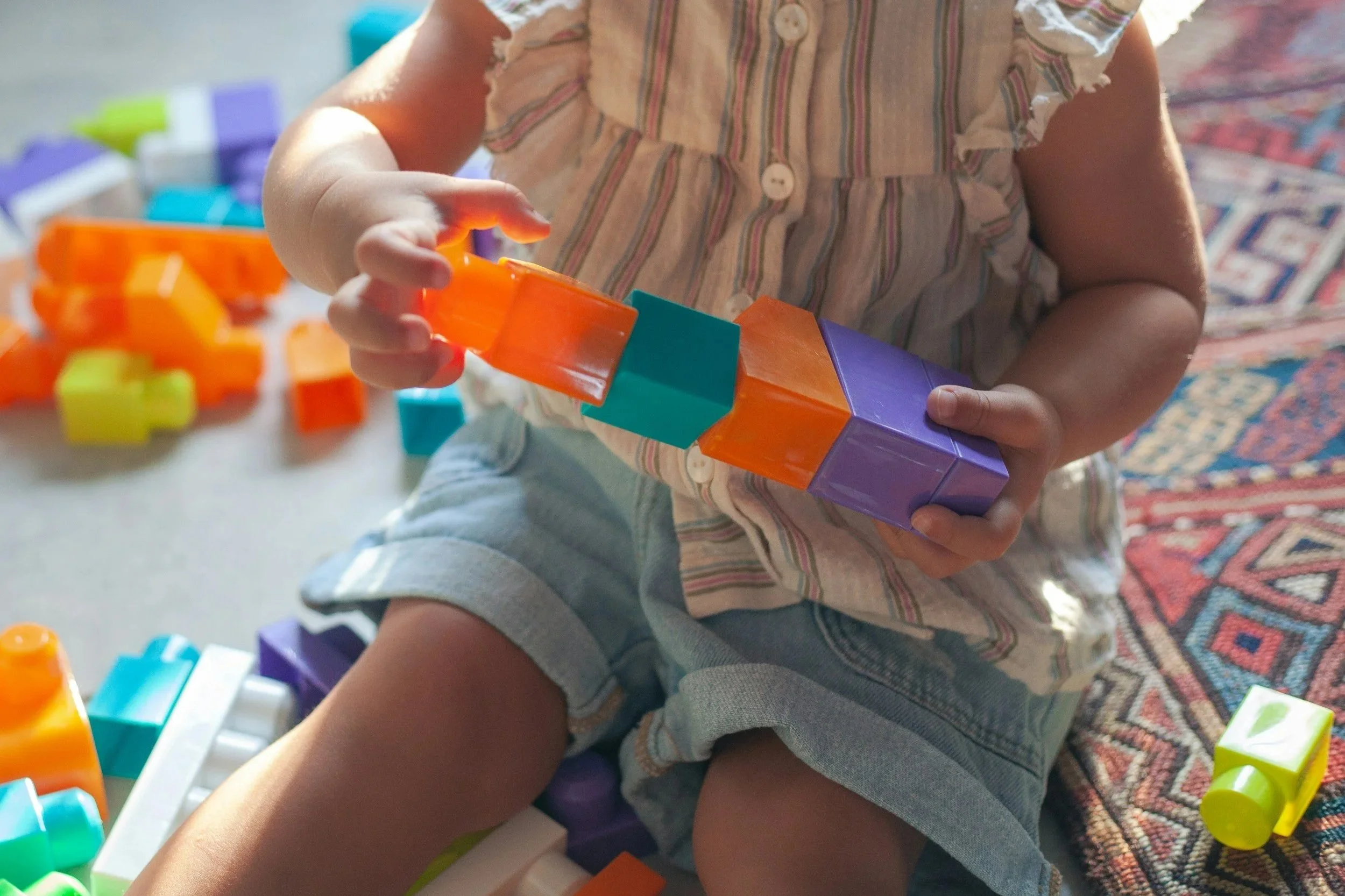
We might sit on the floor together, following your child's lead while I model, observe, and coach in real time.
Sometimes it's a virtual conversation about a hard moment, a question, or something that just isn't making sense.


We might review video together to notice patterns in your child's play, communication, regulation, and connection that are easy to miss in the moment.
Some work follows a specific model, like PLAY Project® Consultation, with video analysis, developmental recommendations, individualized planning, and detailed reports.


I may observe your child or classroom in action, then collaborate with teachers and other professionals to better understand what's happening and what might help.
I believe in finding the approach that fits your child and family.
I’ll bring together what we know about your child and development so we can find an approach that fits your child and family.
I draw from developmental science, attachment, infant and early childhood mental health, PLAY Project®, Circle of Security, and other evidence-based approaches to create support that fits the child and family.
Ways To Work Together
Wonder Brightly provides child and family developmental consultation for families, caregivers, professionals, and organizations. Support is available for autistic and neurodivergent children, as well as children with developmental, sensory, regulatory, communication, play, behavioral, or social-emotional needs. A diagnosis is not required.
-

For Families + Caregivers
A place to slow down, look a little closer, and better understand your child. Together, we'll explore what their behavior, play, emotions, and development may be communicating, then turn that understanding into practical support for everyday life.
Areas of Support—
Parent coaching · Developmental consultation · PLAY Project® · School + IEP support · Advocacy · Illinois Early Intervention
-

For Professionals + Organizations
Developmentally informed support for educators, clinicians, programs, and organizations, shaped around the needs of children, classrooms, teams, and systems.
Areas of Support—
I/ECMHC · Classroom observation · Case consultation · Reflective supervision · Professional development · Leadership + team consultation

Meet the founder
Hi, I'm Brittany.
I'm a pediatric developmental clinician, consultant, and parent coach with experience across early intervention, autism services, pediatric mental health, hospitals, and schools.
I've spent years working with children who don't always fit neatly into a box, and with the adults trying hard to understand them.
I don't arrive with a one-size-fits-all answer. I help you slow things down, notice what your child may be communicating, and translate what we know about development into something useful for your actual life.
Think of me as someone sitting beside you saying, "Let's figure this out together."
The Wonder Brightly Approach
Play. Connect. Grow.
-
Get Curious
Before trying to change a behavior, we ask what may be making connection, participation, or regulation difficult.
-
Build Connection
Relationships aren't separate from development. They're where so much development happens.
-
Understand Development
I'll translate developmental science into something useful in your actual day-to-day life.
-
Build Your Confidence
The goal isn't for you to need me forever. It's for you to understand your child more deeply and feel increasingly confident supporting them.
What it’s like to work together
From a Parent
“Our experience with Brittany was exceptional! I think what stood out the most was she is able to see right to the root of what was going on with my kids. Meaning, she didn’t look at the behavior on a surface level but was able to see what was driving that behavior. Not only was that helpful for my kids but also helped us as parents! I personally have taken that with me and able to apply what I learned from Brittany to different situations. Not only is she knowledgeable in her work with kids, she is an excellent and thoughtful listener for parents. Making the decision to seek help for your child can be hard. Brittany will guide you without judgement. She is kind and gentle to children and their parents! We are forever grateful to have worked with Brittany!”
From a Colleague
“Brittany is deeply devoted, exceptionally educated, and tremendously talented. She cherishes nurturing children on every level of their being—meaning that, in addition to her vast knowledge of child development, she understands the importance of caring for caregivers. Her approach is highly focused on the individual, yet embedded in the systems affecting the individual + family’s life. Her warmth is embodied in all of her interactions, and to know her is to be supported and seen. Without a doubt, Brittany will enhance your life, your workplace, and your way of interacting with children and families.”

Wondering Where To Start?
You don't need to have the right words or know exactly what kind of support you need.
Tell me a little about what's going on, and we'll figure out the next step together.